Through its subsidiary ONNEA in Ivory Coast, Finn Cacao Oy is partnering with Lorougnon Guède University in Daloa
Development of modern aquaculture and spirulina cultivation in Ivory Coast.
Establishing a formal partnership between Finn Cacao Ci and Université Jean Lorougnon Guédé (UJLoG) creates a powerful bridge between academic research and field application. Since the university is a center of excellence in agroforestry and environmental sciences, it can provide the technical « brainpower » to ensure the success of your aquaculture and spirulina projects. UJLoG is not just any university; it is a center of excellence in agroforestry and biosciences located in Daloa, right in the heart of the Haut-Sassandra region where ONNEA operates. Several of its laboratories have already published cutting-edge research on fish farming, food safety, and even microalgae production adapted to Côte d’Ivoire . Partnering with them would allow ONNEA to move from « simple support » (providing tanks and alevins) to a scientifically managed and sustainable value chain.
Management of Fish Farming (Pisciculture)
THE UNIVERSITY OF DALOA PROVIDES THE SCIENTIFIC PROTOCOLS, WHILE ONNEA HANDLES THE COMMUNAL MANAGEMENT.
- Fingerling Quality Control: UJLoG researchers can help the cooperative select the most resilient local species of Tilapia or Clarias (Catfish) suited for the Bangolo climate.
- Water Quality Monitoring: The university can provide training on monitoring dissolved oxygen, pH levels, and ammonia—critical factors to prevent fish mortality.
- Formulating Local Feed: Instead of buying expensive imported feed, the university can help develop a formula using local cocoa by-products (pod husks) and spirulina, drastically reducing costs for the 32% female members.
Technological Innovation: Solar Energy and SCHOTT Photobioreactors
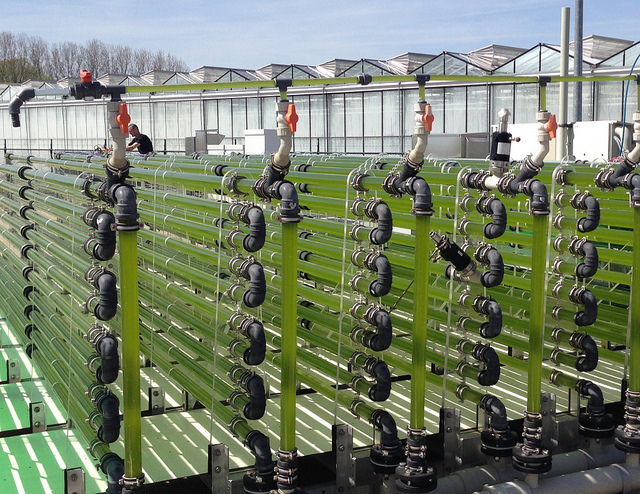
To ensure microalgae production that is high-performing, secure, and environmentally friendly, the project relies on cutting-edge technologies adapted to the Ivorian tropical climate.
The industrial cultivation of algae relies on closed-system photobioreactor (PBR) technology, which allows for rigorous control of cultivation parameters and significantly higher productivity than traditional open ponds. The success of this technology depends on the use of robust, UV-resistant glass tubes that comply with biosecurity and food safety standards.
This is why the project integrates PBR solutions from SCHOTT, a global leader in this field. The DURAN® borosilicate glass tubes provided by SCHOTT offer exceptional properties, summarized in the table below: